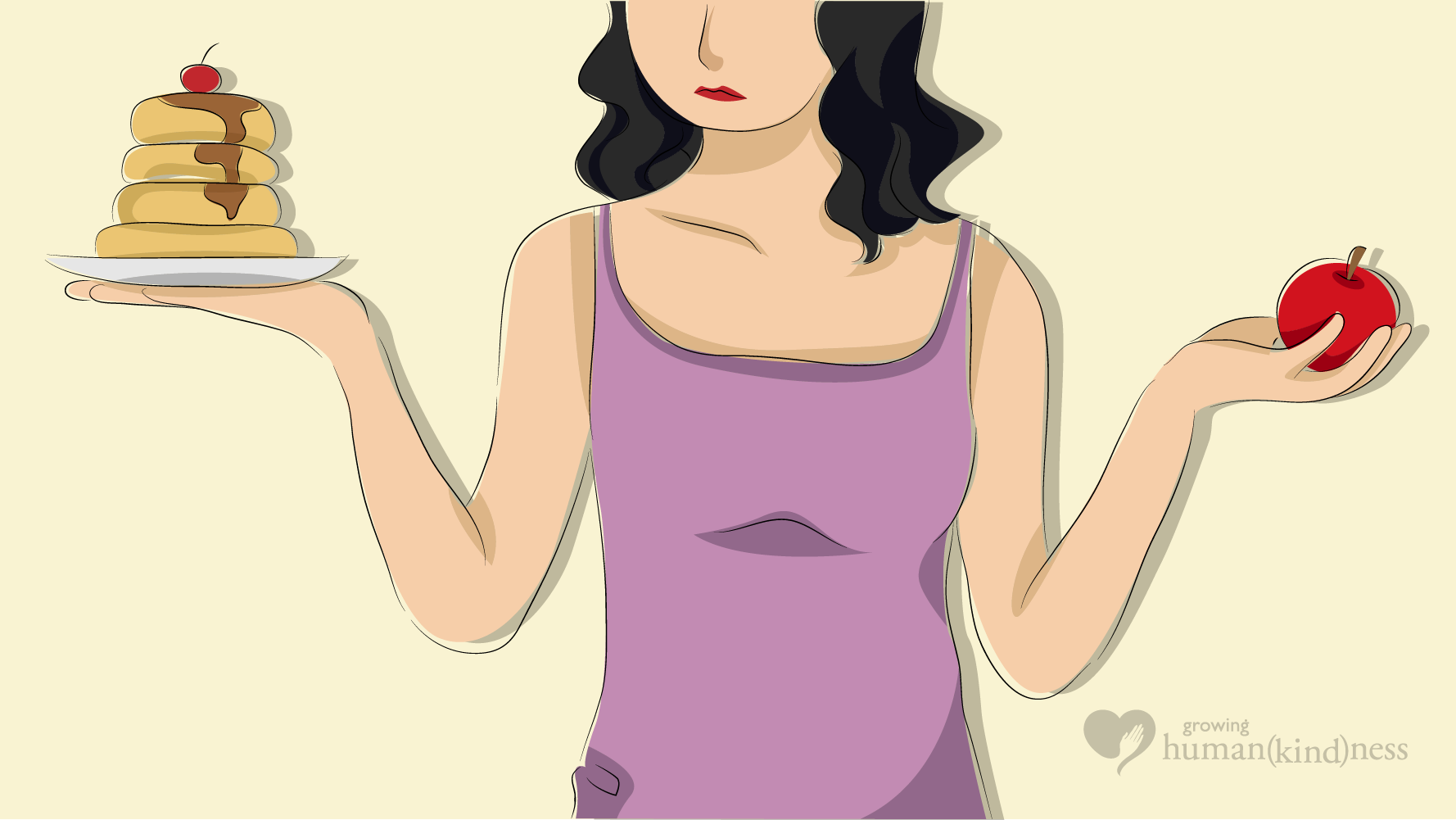
10 steps to fewer sugar cravings
Are you someone who can’t stop eating sugar, once you start? Are you plagued with constant food cravings, especially for sweets or refined carbohydrates, such as pasta, bread or potato chips?
I understand! I was a compulsive sugar addict for over 20 years, as well as having 20 years of eating disorders (including bulimia, sugar addiction, body dysmorphia, and binge eating disorder.) My journey with sugar was a profound wrestling match. Today, it is a wrestling match that I value for how it helped me grow, face the holes in my being, and discover myself.
If you’re looking for help with sugar, here are some tips to begin your journey. You may also want to explore this free video course on finding healing with sugar. For more help, please read on for a beginner’s ten steps:
Here are ten steps to heal your sugar addiction:
1. Add self care
Before you attempt to eliminate anything from your life – even something painful, such as sugar bingeing – it’s important to add to your life, so that you are operating from an overflow, not a deficit. Eliminating sugar will create a vacuum; better to fill it with something nourishing – self love and self care – than something that is hurtful. Adding self care helps you feel nourished, resilient, capable, and strong.
Try this shift: instead of eliminating your sugar habit, try shifting your focus and energy to something that isn’t related to sugar, to something that feeds you. This could be a hobby, an activity that connects you with others, or doing something that out with your community. These things nourish connection, beauty, pleasure and relaxation – what sugar gives in a shorthand, but ultimately, unsatisfying way.
2. Keep your blood sugar stable
Eat breakfast, eat protein with every meal or snack, eat low GI foods, and eat at regular intervals. Why? All of these things will stabilize your blood sugar, so that your moods and energy are at an even keel. Much of the time, I craved sugar because I was hungry (I was always dieting because I was chronically unhappy with my weight). Eat enough so that you feel satisfied, and regularly enough so that you feel stable, and you won’t crave as much junk. As this is not my area of expertise, you can learn more about what and how to eat from the sugar addiction reading list. Try the work of Mark Hyman, I Quit Sugar’s Sarah Wilson, and Diane Sanfilippo (who offers a Paleo approach) for different approaches to low sugar eating. For help with traditional foods cooking, try the Traditional Cooking School.
3. Treat yourself like you’re in detox
The first week of sugar abstinence can be uncomfortable, when the cravings are at their most powerful. Be kind to yourself: this is not the time to tackle a large project, to implement lots of changes, or to work overtime. Why do people go to a spa when they’re detoxing? Because they need extra support. Likewise, give yourself extra support.
Go to bed earlier. Take naps. Cook simple meals (and don’t make the same mistake I did: don’t cook meals for your family that have ingredients in them that you are trying not to eat.) Use exercise to support you – walking, yoga, and more. Call on others for support and encouragement.
4. Don’t focus on weight loss
While weight loss can be a natural consequence of giving up sugar, please don’t make it your focus. It’s better to channel your energy towards one goal at a time. So put aside your weight loss goals for now and focus your energy on healing your sugar addiction. Then, after you’ve found healing with sugar, you can decide how you want to approach any extra weight you’d like to lose.
Weight loss is often a pleasant, natural side effect of taking loving care of your body and freeing yourself from food addiction. In my experience, making it the focus puts too much pressure on your tender heart to lose weight quickly and easily – which can lead to a binge/restrict/binge/restrict cycle with sugar.

5. Know your true value
While yes, you may struggle with a compulsive or obsessive relationship with sugar and while, yes, you may turn to sugar to self soothe, manage stress, or numb out, it’s not who you are. It’s just a coping mechanism: how you learned to care for yourself when life felt painful, overwhelming or scary. This is probably something you learned when you were very small. Overeating or bingeing on sugar is not a character flaw. It’s simply a form of self protection, how you’ve cared for your human vulnerability.
If you use sugar to care for your hurts, there’s hope – the story doesn’t end there. Your brain is remarkably malleable – you can retrain your brain and learn new ways of caring for your needs, feelings, emotions, and hurts without sugar.
6. Create a supportive environment
For the first month after I gave up sugar, I asked my husband to hide the few sweet foods we had in the house so that I wouldn’t seek them out and eat them. (He hid them well because I went looking a few times!) I avoided certain aisles in the grocery store, movie theaters, and abstained from any baking. Later on, when I was in the habit of not eating sugar, and no longer physically craving it, I felt stronger – I didn’t have to do these things. I was able to be around sugar without dying for it.
Think of your supportive environment as training wheels. In the beginning, your training wheels give you the safety to try something that feels new and scary. This structure is supportive and helpful. As you get stronger, you take the training wheels off. The same structure may not be necessary anymore. I’ve found this to be true with sugar.
7. Be a detective
Give yourself time to experiment and learn about your unique body. Only you will know what foods make you feel your best.
Use your body as a guinea pig: what foods make you feel good? What foods make you feel badly? How did I learn that dried fruit affects me in the same way that refined sugar does? By observing my body after I ate it. How did I learn that foods like kale, soup, and almonds satisfy my hunger and give me stable moods? By observing my body. My mentor calls this “walking the maze” – we learn by trial and error, by trying one thing, recognizing it doesn’t work, adapting, and trying something new. This approach towards growth is a mercy to yourself and gives lots of room to try, fail, experiment, and make mistakes. It’s a contrast to the approach of finding the best way to eat and then trying to implement it “perfectly” – an approach that fosters stress, rigidity and tension.
8. Reconsider fake sugars
Many people rely on Diet sodas as a “free” sugar substitute, especially when they’re craving something sweet. But in my experience, aspartame, Nutrasweet, Splenda, and even low carb sugar products (protein bars that are “low sugar”) don’t quell sugar cravings, but increase them. For many people, they also bring unpleasant side effects like headaches and stomach aches.
A study at the University of Texas Health Science Center in San Antonio found that a person’s risk for obesity went up a whopping 41% for each daily can of Diet soda. If you’re sugar sensitive, you may consider including “fake sugars” in the sugar category. You can see this list of hidden sources of sugar for more information.
9. Just start over
You don’t have to wait until the next morning, or succumb to the thinking that says, “I’ve blown it; I might as well have some brownies to go with it,” when you slip up and eat sugar. Changing your relationship with sugar can be challenging, as sugar’s ingrained in our holidays, in our meals, in our society.
Be kind to yourself when you mess up. Use loving self talk to care for yourself when you make a mistake – you can tell yourself, “I can handle this.” Or, “Mistakes are how I learn. It’s okay.” Talk to yourself as the most loving friend would talk to you.
If you’re feeling shaky from too much sugar, you might want to eat a bit of protein. If your stomach is bloated and upset, try drinking a cup of mint tea. On an emotional level, it may help to give yourself space – take a walk, call a friend, go outside, go to the library. Do something to change your environment so you can switch gears.
10. Forgive yourself
I felt very ashamed about my sugar addiction. Releasing that shame was like lifting an enormous weight off my psyche. We’re all imperfect. We all cope with life in messy ways. If you have food issues, offer yourself compassion.
Sugar addiction is not a character defect. It’s often due to biology, imprinting, long ingrained habits, our environment and a whole host of other factors – many of which are not in our control. Can you find forgiveness for yourself? Can you see the bigger picture?
When we release the blame – and most of us blame ourselves, and terribly so – we find we can also release the sugar. It creates a spaciousness where we can act differently, where we can respond to sugar in a different way and let go of its hold on us. Forgiveness and compassion are the only way I found peace with sugar and found the courage to change my relationship with it.

Hi Kerry,
I'm addicted to sugar too, you've got some great tips here. I love to see that there are others out there who are blogging about sugar addiction, I really think that there are more people who are addicted to it than realize it.
Here's to staying off the white stuff. 😉
Dear JoLynn,
Yes, I was a sugar addict for decades—I was hooked! Giving up sugar for good literally gave me back my life, ending the violent mood swings, feelings of "going crazy," and low self esteem that I experienced from eating sugar. I have an ebook coming out on conquering sugar addiction that will be available for purchase on firstourselves.com in the next few weeks. Find the sugar addiction book here. Good luck on your journey!
Best,
Karly
I am currently
Struggling with the sugar cravings 🙁 I try to lose weight was recently diagnosed with type 2 diabetes and I fell off the wagon last night and today, all the Halloween chocolate and candy 🙁 I over did it and I haven’t
Been able to stop since last night. Terrified and beating myself up so badly.
Hi Amy,
Thank you for writing. Binges can certainly feel alarming, painful and frustrating!
These two blog posts may be a help and may speak to you –
How to find healing in a sugar binge
https://growinghumankindness.com/healing-sugar-binge/
A binge is a cry for connection
https://growinghumankindness.com/binge-cry-connection/
Your article is about as helpful to a sugar addict as a broken umbrella in monsoon season.
Dear Charisse,
From reading your note, it sounds like my work isn’t a good fit for you. I wonder what kind of help you’re wanting that you didn’t find in my article? If you share more about what you’re looking for, I could direct you to some other places where you can get the support that would help you.
Hi Karly,
Thank you so much for the book. I am going to read it. I am trying to lose weight but it is so difficult because I am addicted to sugar.
And here's the weird thing – I'm a guy! This seems so rare because I only ever hear about women who are addicted to sugar!
I eat sugar every day. Recently I have even been addicted to ice lollies (popsicles). Sometimes I will even eat 30 of them in one day!!
I have stopped cold turkey and suffering withdrawal pangs like a smoker quitting. It's really difficult….thanks for the book, I will let you know how it goes. I am also going to post about you on my blog.
Chris http://www.Grow-You.com
This advice is so great! Lovely really, the self-care stuff brought tears to my eyes, so it must be what I need!!
What is really hard is that I am known as a Great Baker!! It is part of my identity and that is tough to deal with.
Like a wine merchant who gives up drinking!!
I'm just coming to terms with the fact that have a sugar addiction. There is no denying it. But the thought of giving up sugar is terrifying. But it's something that I must do for myself. I'm tired of being tired and constantly struggling with my weight. A battle which I am losing as I get older. I'm glad to know that there others (I'm sorry that you all are going through it too) and that I'm not the only one that is dealing with this. I'm still stunned that this is really an "issue" for me.
I am a young woman, fighting off an eating disorder. I've finally come to realize that the root of my binge/purging lifestyle is due to my addiction to sugar.
These tips were very helpful. I'm glad to know that i'm not alone in my struggle.
As a result of a blow to the head about 15 years ago which wiped out my sense of smell and therefore my sense of taste, the only tastes I get are the few taste buds on the tongue: sweet, sour, salt and bitter — all weight gainers and the only flavors I crave. No sense of smell also wreaks havoc on the appetite as well. My stomach seldom really feels hunger, but my mouth is hungry all the time but only for those 4 flavors. Don't know if this qualifies as a sugar addiction but I sure need to quit it.
" I don't endorse the idea of 'once an addict, always an addict.'"
———————————–
Please do a little research about this. While sugar addictions may not have the same physiological process (although I believe there has been research to suggest it does) chemical addictions to drugs and alcohol are caused by actual physical changes in the brain. It isn't a "spiritual" change. Please be careful what you say — what you say on here could have real consequences for someone actually dealing with an addiction or dealing with someone that has addiction.
Thank you for the comments. I am not an expert on all types of addiction nor do I set out to be: I am merely a woman who struggled with sugar addiction and who has found peace by remaining sugar abstinent. I want to help others find similar peace.
I certainly understand that there are other factors that lead to addiction, which is why I don't offer medical advice. Yes, there is a biochemical component. And, yes, there is a spiritual component, too. I try and address the spiritual component and let others help people with the physical component.
I think the two approaches go hand in hand, that it isn't either/or.
Thank you for the food for thought and the dialogue.
Take good care,
Karly
Some people have had success with agave or stevia, in that they don’t trigger sugar cravings in their body. I wasn’t able to do so. In fact, one of my favorite binge foods was the agave sweetened peanut butter balls from the health food store!
In one sense, the agave sweetened treats were better, as they didn’t spike my blood sugar like regular white sugar. But as Kathleen Des Maisons explains in her book Potatoes Not Prozac (an excellent book that explains the science behind sugar addiction, the physiological drive to eat more and more sugar), blood sugar is just one component of a sugar craving. Sugar also affects your feel good transmitters (beta-endorphins and serotonin, mainly.) So even though a sweetener may not spike your blood sugar and lead to sugar cravings, it may set off your endorphins or serotonin, creating a biochemical drive in the brain for sugar.
Agave does this in me. Not as dramatically as white sugar, but, it does cause a craving for more and more sugar and sweet stuff over time. For this reason, and because I love the abundant health that I have when I’m not craving sugar and obsessing about food, I stay away from all sweeteners. But that is me and my body. If I had to characterize my sugar sensitivity on a scale from 1 to 10, I would put me at a 10. Your body may not be that sensitive. You may be able to handle stevia and a little agave just fine.
So here’s what I would do:
try it and see how you feel. Experiment. Test and measure the results.
If you find that you can’t live without your tea and coffee with agave, if you find yourself craving other sugary foods, then that may be a sign that agave does effect you. And if you don’t find yourself hooked by it, wanting to eat sugar and needing to have it in a compulsive way, then it sounds like it may be okay for your body.
We talk about this process of learning what to eat in the Control My Sugar Cravings support program.
I hope this helps!
Best,
Karly
Can I, or should I use Agave for sweetening my coffee or tea if I am trying to go sugar free? Will it increase my craving for sugar like the artificial sweeteners?
I'm seriously addicted to sugar right now. I had given it up many years ago, then took a job as a baker, and things went downhill from there, lol! But I'm looking online for ideas and help to eliminated it again, so thanks for all the great info!
Tracy
I know that I am addicted to sugar. I have read the e-book (which I loved!) and numerous other books about giving up sugar. I have all the information and I know that this is what I want to do, but I can't seem to take the steps to make it happen. Is anyone else struggling with this?
Ah, Helen, of course! We all struggle with implementation. Knowledge doesn't always translate into behavior – one of the challenges of being a human being. That's why you might try our Control My Sugar Cravings support program, designed to be self-paced and yet gently move you through a 12 week transition with support and guidance.
Here's another fabulous expert on the science of sugar addiction, Dr. Julia Ross (I highly recommend her book The Mood Cure), in an interview about sugar addiction with my pal Jimmy Moore.
Hi there,
Great article! I like how you address mental ways to also break sugar addictions. Hope you don't mind, but I mentioned it in my blog as well.
Bye for now,
Lisa
Hi Lisa, I love that you mentioned this in your blog! Thank you for the shout out. Warmly, Karly
Hi all,
I gave up all sugar, white flour, white rice, dairy due to the milk sugars and fruit two years ago. I couldn't ave done it without xylitol. This is a sugar that tastes like normal white sugar but is extremely good for us. It is made out of brich tree bark and has a very very low G1.
It's amazing stuff!
x
I wanted to respond to anonymous' comment, because I think it was a valid point. When I say that I don't believe in the comment "once an addict, always an addict," what I meant is that I don't believe in *defining* yourself by your addiction – in labeling who you are as a person as an "addict." I am speaking about how you see yourself – not in how you go about healing yourself. I understand that addiction is due to a combination of many factors, including, in the case of drugs and alcohol, chemical factors in the brain. This may mean getting professional help to heal from an addiction. But even as you are healing from an addiction, are you not also more than your addiction? That is my point.
V interesting ebook. Thanks for all the info. So much hidden sugar everywhere!
Thank you sooo much for providing this book for free out of the kindness of your heart!! I have just come to terms with my addiction. I have known it for years but have been reluctant to give up my addiction because I have never had any support and because it is so accepted in our society like you said. It's flipping everywhere!!! Thank you soo much for taking the time to help people like me with their addictions and providing a comforting helping hand through our struggles.
I love your e-Book. But the link to other books about the negative effects of sugar is dead:
http://www.firstourselves.com/first_ourselves/sug…
Thanks!
Hi Clay,
I'm sorry about the broken link. We relaunched our site in the past 6 months on a new hosting platform, which has resulted in broken links. Try this link to get to the reading list:
http://www.firstourselves.com/2008/reading-list-f…
Thank you very much for this ebook! I have recently come to terms with the fact that I am addicted to sugar, and did not have any idea how to overcome this addiction. This has been very helpful, and I feel that planning how I am going to overcome it is halfway to actually doing it 😀
Hi Joanna,
You're welcome! I'm glad that the book has been helpful to you. If I can do this, you can, too – and I was the biggest sugar junkie I knew. If you need more support, considering joining our forums or our sugar program:
http://www.firstourselves.com/sugar-support/
Support is the biggest key, I think, to change. Lack of support was one reason why it took me so long to get off sugar for good.
I'm excited for you as you take this leap forward.
You are very welcome, Brittany. Yes, you are right – it's hard to give up something that is so ingrained in our lives. And yet the freedom on the other side is so powerful. I know you can do this – keep the faith.
While I enjoyed reading the ebook, I noticed that there weren't a lot of options for vegans. I do not eat meat or animal byproducts. Not only do I do this for my health, I also do it because I care about the rights and welfare of all animals. My main foods involve lots of fresh fruits and vegetables, and I abstain from eating any animal flesh or other body parts. I also avoid processed, packaged foods. This diet works very well for me. I stay trim, healthy, and full of energy, and it feels wonderful that my actions reflect my values. Veganism is a great way to avoid unnecessary added sugars and reap the benefits of natural foods without the guilt of consuming the flesh of living beings.
Hi Meg,
I know many vegans who also choose not to eat sugar. I think that's great that you're aligning your values with your food choices, and finding a way of eating that resonates with you body, mind and spirit. My philosophy about food is that each person needs to find a way of eating that honors their body – an integrative approach that values many different ways of eating. In my ebook, I share what works for me as an example of one way of sugar free eating, and not as a prescription for what to follow.
And here's what we do have in common – vegetables and nuts are the mainstays of my diet. We consume *a lot* of produce in our house.
Flaneur, Yes, there's lots of hidden sugar, particularly in prepared and packaged food. I can taste the sugar pretty easily – just the other day I was eating a new salsa my husband bought. As soon as I'd had a taste, I said, "This has sugar in it."
"No it doesn't," my husband replied.
I read the label, and sure enough – sugar.
You may want to read The End of Overeating by David Kessler, as he talks about how the food processing industry intentionally adds sugar (and salt) to food to make it taste better and to sell more. Very interesting read….
Hi Tracy,
I'm glad you've found lots of support here. Wow – a baker – that would be a very challenging job for me! If you're looking for more support, we have a Sugar Addiction support program http://www.firstourselves.com/sugar-support/ and forums to help you break free from sugar.
Hi Cal,
I was bulimic for over 5 years, and my favorite binge foods were sugar and simple carbs. In fact, I don't think I ever binged on broccoli, carrots, or steak. I definitely think there's a connection between sugar and bingeing – although I also had to heal my emotional addiction to sugar (the fact that I turned to food to solve life's pain.) I know the pain of an eating disorder. I wish you health and wholeness on your journey.
Hi Kim,
I know how you feel. I know many people who can eat sugar moderately without a problem – so to them, the thought of being "addicted" to sugar is almost laughable. Honor how you were made, your limits, and your body. We all feel terrified about giving up sugar. But there is so much to gain – namely freedom, peace and wellbeing.
Reading your story is the first time I have felt reassured …
I cannot express the renewed hope and peace that washed over me as I found this site and read your article. My story is very similar. I have tried many avenues for many years to allow God to work in and through me. I want to be my best to give my best to serving others and I absolutely cannot if this is controlling me. I want to read everything you have written. Your kindness, gentleness, compassion and integrity are amazing. Someone I aspire to be like. Thank you for taking the time to share your testimony and help so many others save their lives. Please let me know where I can find all of your work and what I can do to succeed at this in my life. I would be eternally grateful. Thank you! Thank you!!
-Kate
I am actually considering giving up sweets. I’m fine if I never have the first piece. If I have one, I’m going to have seven! Do people actually abstain totally?
Hi Pam, some people do abstain from sugar for a period of time – and for longer! But most people, in my experience, focus on lowering their sugar intake rather than completely eliminating it. In my own life, I practiced abstinence for a while, but I no longer do so. I do eat sugar mindfully and carefully, though, as I don’t feel great on it.
Hi Lilybart,
I can empathize. For much of my life, I have treated myself so harshly. Pushing, pushing, pushing myself…being the stoic….ignoring my needs….criticizing myself for feeling lonely, tired, sad, or frustrated. My journey began with offering myself compassion – something I starved myself of as I gorged on sugar.
Hi Chris,
Thank you for the link. And you are not alone – I hear from lots and lots of men who struggle with sugar addiction, too.
I am a sugar addict. I tried giving up sugar for lent–failed. I changed it to chocolate—-failed. I wish my health insurance would cover a treatment program (like they do for other addictions (etoh, drugs). I really think I need inpatient treatment with multiple disciplines involved in the process. I googled "sugar addiction" and came across this site. I sure hope there is something here that will help!
Hi Elaine,
I can relate to your story. My sugar addiction felt so huge – it felt impossible to heal. But I want to assure you that you can. The First Ourselves sugar addiction support program uses many disciplines, and may be just what you need. We'd love to have you join the hundreds of other women who are giving up sugar together:
http://www.firstourselves.com/sugar-support/
I’m getting ready to join a support group/motivational program here locally run by Dr. Nick Yphantides called healthsteward. I have recognized that sugar addiction is the major issue for me as far as being the food I turn to for emotional suppport. The thing about the tortilla chips is very interesting also because I tend to like to binge eat chips and salsa and then I want to eat sugar. I also notice I seem to crave cheese a lot. Do you see any connection between that and the sugar addiction. I started a medication three months ago which I was on 10 years ago. During that time previously I gained 80 lbs and I am only 5’2″. My appetite is increasing and so are my cravings and I am exercising but I’m not interested in over-exercising to keep up with eating too much sugar or anythingelse. I want to stop this now. In two weeks I start healthstewards and will be part of a small accountability group which meets once a week for 45 minutes preceded by a 45 minute motivational lecture given by Dr. Yphantides. I plan to read your book right alongside with his (“My Big Fat Greek Diet”). God bless and thank you.
Hi Karly,
I really don't know where to start. I can't imagine a life without sugar yet I know that is an illusion. I am living off caffeine and sugar and fat and going to school. Not really nutritional for my brain. I stopped bulimia about 1.5yrs ago which is amazing. Any idea where I can start.
Melinda
great post as usual!
Any Idea the effect it would have on a 14 year old girl?I was never really into sugar. I mean I really don't eat sugary things, or really salty things. But I know i do consume some like in cereal. BUt not enough to really hurt me. You should see some kids, they eat so much.I'm really good for my age, and I don't eat fast-food or dairy. Do you think I should try?
I have given up sugar as well (8 weeks this Thursday), and am wondering how you implement "no sugar" in your life. I went sugar free at first just to lose weight on this diet as recommended by Dr Mercola's book "No Grain Diet." I have given up all grains, starchy food, and fruits (except for some lemon juice added to teas and sauces). On the stabilize portion of this (diet for life) I can have healthy grains quinoa, spelt, and tef etc. I have only cheated on my diet once (last Monday) by getting a sundae (totally wasn't worth it!) and I had a headache afterwards.
On the stabilize portion of this diet I can have fruit and the grains in more limited quantities. Mostly watching and monitoring my body weight and glucose levels closely to make sure the grains aren't making me gain or I'm not eating too much glucose.
I'm just wondering what it feels like to be sugar free longer. Also, besides staying away from sugar explicitly, do you also avoid artificial sweeteners, honey, starches, and monitor your fruit intake?
On the stabilize portion of this eating plan, I can have xylitol and raw organic honey desserts, but I'm not sure how often I should eat these things. They're labeled as "treats."
How often would you suggest I eat healthier treats like this?
Also, the hardest thing about this diet is avoiding all the added sugars in food. Such as sugars that are just in my sauce on my steak dianne. Do you avoid all added/hidden sugars when you go out to eat, or do you go ahead and eat them, but refrain from things more obvious with their sugar content?
The hardest part is finding dishes that don't have any sugar content at all. Almost impossible unless I just eat raw fish, chicken breast, or plan salad with o/v on side!
sugar is a drug. someone, ANYONE, convince me otherwise. even when i don't like the way something with sugar in it tastes, or even when i know i've had enough, sometimes, OFTEN, i just "can't" stop. and just like an addict to other powerful drugs to which the body becomes resistant, many times i consume the sugary products to bring me from feeling horrible to feeling normal enough to function.
!?!?!
Yeah for you Sharon!! It sounds like you are connecting the dots and putting together the pieces for your health.
XO, Karly
Hi,
This site is just what I have been searching for! Thank you, Karly. I didn't know that other people have issues like this as well as me. It's great that I can finally have some support!
I have a question. Whenever I tell people that I'm giving up chocolate or unhealthy foods, they always protest or tell me to stop being stupid. For those who have given up sugar completely, what do you say to people when they ask why you're so picky with food?! I find it really discouraging when people have a go because I'm trying to be healthy (and not broadcast to the world that I have an addiction to sugar!).
Thanks,
Miriam
Hi Emily,
My book Overcoming Sugar Addiction answers many of your questions. It shares my experience of giving up sugar and making peace with sugar free living – as well as how to find the joy of eating this way (healing my feelings of deprivation and "it's not fair.")
Yes, not eating added sugars is an adjustment! I look at sugar in the same way someone may look at a food they're allergic to. In this free friends area of First Ourselves, there's a 30 minute audio where I talk about this. Go here to join (it's free): http://www.firstourselves.com/membership/
XO, Karly
Hi Melinda,
There are lots of free resources here to help you. We have a free friends area with audio and exercises and more: http://www.firstourselves.com/membership/
If you are thinking that you'd like to start giving up sugar, you may want to read Potatoes not Prozac by Kathleen des Maisons. It's the book that taught me about sugar and helped me break free. I'd also suggest reading my book, Overcoming Sugar Addiction, that shares my story and how I gave up sugar.
You may also be interested in reading Julia Ross' book The Mood Cure. Many of us who've had bulimia have found this book helpful in healing the brain.
That's where I would start.
You can heal this!
XO, Karly
Kyler,
My husband is someone like you – he eats some sugar but it doesn't cause a problem for him. He can have a bowl of ice cream and stop.
When I eat ice cream, I eat it until I'm sick.
What's the difference? I'm sugar sensitive. My husband is not. That's why I don't eat sugar, but my husband eats it in moderation.
From your description, it sounds like you're okay eating sugar and that you do your best to eat a healthy diet. Good for you. I love the adage, "If it's not broke, don't fix it!" It sounds like you're right where you need to be.
To your health and wholeness, Karly
The only thing that has ever worked for me is the 12 Step program Food Addicts in Recovery Anonymous, foodaddicts.org
I have been fighting my flour and sugar addiction for over 20 years. I have been in and out this Program, and come back because trying to do Karly's program on my own never works….I have no self control.
I've been struggling with binge eating disorder and have a very bad sugar addiction. I am printing this article out!
I have a question though, how long does one abstain from sugar for? When is it and is it ever okay to reintroduce sugar to ones system?
Thanks!
Hi Sara,
I'm glad you wrote, and I'm glad that you recognize that you need more structure, what FA gives you. It sounds like you're listening to your own inner voice about what you need.
My program isn't for everyone, and there are many different approaches to healing from sugar addiction. FA is a valid path for many people. If it works for you, keep at it!
Best to you,
Karly
Thanks for the advice!
I am battling my sugar addiction in the form of COLA. I've tried diet and Coke Zero, but I know that I'm just going to have to give it all up.
I'm so encouraged to locate this website today. The one area of my life that so grieves me is this craving for sugar, particularly ice cream. It's like something comes over me and I go and eat it until very uncomfortable without thinking. I then ask the Lord to forgive me and do it again later. Years ago I did read the Prozac to pototoes book and it helped me see how truly physical this deal is. But, oh, I do need help. I simply cannot do this alone. And now I am approx 100 overweight….something I never thought I was capable of. I feel hopeless that I'll succeed because I've failed so many times in the past. How can I get myself mentally energized again and grasp onto some real hope that I can be free and also my normal size again? Thanks.
Hello, I have just begun to lose the sugar and although I am not sure I am addicted as an alcoholic is addicted to alcohol, I am experiencing cravings that are beyond anything I have ever experienced. It seems that sugar is everywhere and all I can think of is cheating. Thanks for listening.
Diana, I'm glad i found this web site too! Thanks Karly! I want to encourage you to join startyourdiet.com it's free & it's an online support group of women just like us- struggling to loose weight! they have tools that help us along the way to stay motivated- did i mention it's free? good luck to you!
I havent started any program yet, but I already feel defeated. I understand that I use food, specifically sugar, as an emotional support. However, I cant see any way to cut it out without such a level of misery and depression that I would ultimately fail. I am a trained pastry chef and have a job that I totally love, one where I get to make all sorts of goodies every day. The variety means that I never get tired of tasting what I have made. The enthusiasm that others show for my desserts is also a reward. I LOVE tasty food, far far far more than sex! I love the colors, the smells, the textures, and certainly the taste. My emotional stability in my marriage is being held up by the close availability of chocolate. I am so far in debt that I have no hope of being able to buy or do anything for pleasure for at least the next 5 years. Basically, my job, my children, and food are the only pleasures in my life. I also have no will power. Other attempts to give up sweets have made me instantly depressed, before even starting, and I end up sleeping as much as possible to hide from the fact that my conscious life sucks if I remove sugar from the picture. I end up not eating, because forcing myself to eat what I dont desire pisses me off so much. I dont open the carton of icecream and eat until I feel sick; I have a steady trickle throughout the entire day. Coffee and a few M&Ms for breakfast, a donut when I get to work, an apple with caramel dip as a snack, several spoons of batter of whatever dessert I am making at work, a muffin later in the day, tea and whatever leftovers I can find from the previous days dessert, a few more dessert bites when I serve it at dinner time, chocolate milk and a few more chocolate bites when I get home and before I go to bed. When real food is put in front of me, I eat it, but then still want sweets no matter how stuffed I am. No matter how much I eat of good food, nuts, veggies, protein, etc., I never lose the craving for something sweet. My husband wants to hear about my fantasies and I really cant tell him, because a slice of flourless chocolate torte and a creamy cup of coffee isnt what he has in mind. He harasses me about my sugar consumption, but isnt supportive in a helpful or sensitive way, which ultimately makes me want to just sneak sugar to feel content without the attacks. I feel totally hopeless in this. Even thinking about it makes me depressed and I certainly cant afford therapy or real Prozac. What do you do when a pan of warm brownies sounds so much more appealing than socializing, sex, conversations, any hobby, ready, watching tv, or any other thing I can possibly think of??? My job brings me great happiness, but puts me in contact with sugar constantly. Am I basically doomed?
Oh my gosh !, I feel like your my twin . Each day I wake up knowing my sweets at the end of the day is my goal. I try to eat small amounts during the day to justify the calories I’lll wolf down at night . Forget sex or socializing I would want the pan of brownies too!! . I am actually very attractive but I’m covered by an extra 65 pounds of fat because I can’t keep the sugar out of my mouth i’m now getting older and having acid reflux from Prilosec I have been on it one year and had my first fracture so now I’m trying to stop that immediately because it leeches the calcium out of your bones but it wants me to stop eating three hours before bed and those three hours are usually when I have my sugar gorge fest . I also feel like I wish I could be put in a rehab center from sugar
I am at my wits end. A few years ago I read Potatoes Not Prozac and loved it, but I didn’t get far with it. About 15 years ago I gave up sugar, counted calories and lost 120lbs of which I have gained back 60. I know that my struggle is sugar… because I can’t stop thinking about it and go to great lenghts to get it even when it’s not in my house. Now that I’m older, I’m feeling the effects a lot more in the form of hypoglycemia and pre-diabetes. I am a nutritionist… so the excess weight and the sugar is an embrassing problem on many levels. I know better… but here’s the real kicker… I don’t want to give up sugar even though I know it makes me feel like crap and I know the long term dangers of it… I just enjoy it so much. I sometimes wonder if I can get as much pleasure from anything else ever again. I feel like it’s the only thing I truly really and fully enjoy in life. AND I’m not a generally depressed person. I actually have two great kids and a husband that I truly love and respect. So… how can I give up sugar with such strong feelings about it? I want to give it up, but I’m afraid I can’t because I so look forward to it…
i don;t know if i am addicted. its seems that when i get sugar, like if i have a piece of candy, having more sugar, like more candy of a cookie is all that i can think about, i cant focus on anything else, am i addicted? and then there is the fact that i dont want to give up sugar, i love it, and thats the problem. if i am addicted, will i ever be able to have just one piece of candy? i dont want to give up sugar, but i dont want to get diabetes, etc. i hope that you can answer my questions…
I don’t find giving up sugar at all hard but i have the same addiction behaviour you describe. It easy to quit entirely. In fact its the only way. You shouldn’t crave it at all if you are getting enough to eat. And my god did i lose weight fast. But i also gave up a lot of fat things from diet and brought back full cream milk. But its the sugar foods that make me put on weight so fast so that is the imperative thing i give up.
I don’t think there’s enough guts to this topic to make a sensible book out of. Its really very simple. Give up all sugar (and the tip about fake sugar makes sense) don’t start using honey or molasses etc. Just keep away from all that stuff. Make your other food tasty and healthy. And you won’t miss any of those things.
But don’t replace sugar with high fat foods like cheese or pastries either. Just go with good healthy things. Eat more fruit. Eat more simple dairy. Eat more vegies and oats. Its really very easy its astonishing.
I’ve lost about 5 kilos in three weeks and i eat whenever i do get hungry but i try to keep to three meals a day.
Dishes that are good for me are:
oats with milk and fresh fruit
yoghurt and fruit
ratatouille (find a recipe off the web)
pasta and tomato sauce but no cheese
fish obiviously
salad sandwiches with avocardo instead of butter (i’ve given up butter)
nothing fried except perhaps the odd egg
no bacon or food like that
sushi
ratatouille on dry toast
coffee with only milk keeps me going through most of the day
My one indulgence is a glass of wine in the evening.
Hi Andrea,
How awesome that your sugar abstinence is easy! It sounds like you are listening to your body and finding the foods that make you feel good. That was a huge part of the journey for me, too.
Best of luck to you on your journey to greater health.
XO, Karly
To your point #5, thank you so much. This article touched my heart and made me realize some very important things about myself. Thank you for helping me.
Hi Karly,
I’ve read all the comments and you and several people mention a free ebook that I would like to read. Can you send it to me?! That is so nice of you to help others. I just googled “overcoming sugar addiction” and found your website. I wasn’t even sure there was such a thing, but realized that if there is, I surly suffer from it. I’ve never tried any kind of addictive substance (alcohol, tobacco, narcotics or illegal drugs) and don’t drink soda as a rule, but my relationship to sugar can’t be any less difficult than overcoming other kinds of addictions. If it’s baked or frozen, I’m particularly fond of it, as well as the entire spectrum of candy. If it’s grown in the earth or lives in the ocean, I’m not a fan.
Yes, it’s bad. It even feels hopeless. I can’t fathom giving up all sugar, forever.and.ever.and.ever. I’m so all-or-nothing generally. But from what I’ve read on your site, I’m not the only one who is like this.
One of the most amazing things I ever did was give up anything with sugar in it from the moment I found out I was expecting my first child, for the duration of my pregnancy. By that I mean anything that you’d think of as “sugary”. I still had bread, which I’m sure had some. And some sauces etc. But no beverages or desserts of any kind. I was going to grow the perfect baby, and I was on a mission. I was surprised at how strong I was in doing that. People would eat their creme brulee and offer me a taste, but I never wavered in my resistance.
That was 14 years ago. I marvel at that now. I know doing it for my baby was a good cause, and that doing it for myself should be just as motivating, but it’s not. I, like others here, am kind of known for making amazing cakes and baked goods. I love making them for people, and I L.O.V.E. eating them, too. Right now I’m dying to have a treat. I had plain, raw oats with skim milk for breakfast, and 3 hours later i had two poached eggs with sugar-free salsa. But all I want is to open the mint Oreos I bought to use in some special cupcakes yesterday (Before I found this site).
Anyway, thank you again for the service you’re offering. I hope your book helps (you can send it to the email address I used for my comment) and that I find courage and strength in overcoming this enslavement. ♥
You are so very welcome! It's very, very easy to identify with our coping strategies, and then believe we're this flawed mess. Remembering who we are – and remembering that overeating, sugar bingeing, and more are just that – coping strategies – helps us find the space to heal the pattern. I'm so proud of you!
Hi Blue,
Unfortunately, the sugar ebook is no longer free. You can purchase your copy of the ebook for $10 here: http://www.sugar-addiction-book.com/book/
You can also purchase a paperback version of the book.
We do offer free forums where you can talk to other women who are trying to find peace with sugar, food, their bodies and more:
http://www.firstourselves.org/forum/
I hope that helps!
Best, Karly
i love sugar too! cant help it,starts of as one biscuit…then the whole pack is gone!
im at a loss what to do with myself,the more weight i gain the more i turn to sugar and the more i want to eat,and the whole time im eating i think i should be jogging or playing with the kids at the park,but the tv and the chips/choccy/anything are a better idea than exspending energy!! my kids would love it if i took them to the park more often or walked them to school,and i find myself needing more sugar earlier in the day,so i have 3 sugars in my cup of tea now!! im a grown woman with 3 kids! you would think i could just snap out of it and control such a stupid habbit,but i guess that is why its called an addiction,because you cant help it,you eat it without thinking about it,and it feels so good to do it to !! hopefully i can rid myself of sugar and prevent my kids from following my path,and we can all start leading a happier healthier life together! and maybe drop that 5-10 kilo’s thats been bugging me for the last 7 years!
thank you for acnoledging sugar addiction,i wasnt sure if i had made it up in my head,i new that salt was addictive,now i no for sure that i must over come sugar,and all the bad things that it can do to my body and my life,time to stop wasting time with sugar,and spending more time and energy on things that are good,wish me luck because i no how i feel without it!!! headaches,tired,an even sick in the stomache,sometimes i cant concentrate,and i no ill get cranky! i just hope my family realise its all for a good reason!
thank you again! good luck me! -holly.
Stevia! Especially in beverages. It tastes sort of like splenda except it is natural, it's a leaf that is ground up and actually good for you. It's still a challenge but it does help a lot – mix with low sugar yogurt, add some berries to it, maybe a bit of vanilla – great! Home made lemonade with stevia is so good and good for you! If I didn't have stevia, I'd be much worse off. I just slipped up while babysitting (the place is literally like a 7-11 there is so much sugary stuff). That's why I'm here, but at home, no sugar only stevia, and I'm good!
Hi Amanda,
I've talked with many who are fine with stevia but who have addictive reactions to other sweeteners. I love that you found something that works for you – I feel so happy for you.
I'd love to make lemonade with stevia for my kids this summer. Do you have a recipe to share?
XO, Karly
I want to give up sugar, not for weight loss, but to see if I can clear up my adult acne by bettering my internal system. I am already very thin, actually underweight due to recent health issues, so I am afraid of weight loss. Do you have any tips for me?
I need to quit the sugar…. I feel like I have no will power though. I successfully eliminated sugar one year for lent. I used to add 10 packets of sugar to a 16 oz cup of black tea. That year I went down to 1 packet. After lent was over, I was amazed at how much sugar I could taste in a granola bar! But years later (like 10?) I am still eating sugar every day. In fact I have a whole lunch box here that was an auction item that was never picked up… AND I have consumed about half the candy that is inside! I love sugar and breads so much. How can I completely kick them out of my life? These things are the cheapest things to buy, and without a job I can't afford much… $1 burgers are cheap (though extremely unhealthy). I would love to make a go for the fruits and veggies, I just don't know how long I can make that last with no $$$
Hi, Karly and Bloggers. I am so interested in finding out more about support for sugar addicts. Years ago I lost 80 pounds because I tried a weight loss diet that eliminated sugar. Since then, I’ve gained and lost the weight and then some more times than I’d like to say. But, it isn’t merely weight that sends me looking for help. I’m a type 2 diabetic. My doctor told me yesterday that the reason I developed diabetes is because of my weight. I am a binge eater from the word go. Two years ago, my husband had to hospitalize me because my blood sugar was 720 ( for those who don’t know, blood sugar is normal between 65 and 165). I was having facial seizures every thirty minutes. It was terrifying. Once the blood sugar was lowered to normal, the seizures stopped. I monitor my blood sugar, but I am still very overweight, very addicted, and apt to binge. I finally found a happy marriage and a good life in my forties. I realize though that my life will be so much richer if I can stop the binge-eating and get control of my diet. The doctor said that since I was still pretty young (46) and had no other serious healthy issues, I could probably get off of my diabetic meds if I just got the weight under control. For me, that means the sugar must be controlled. The night I was hospitalized I had eaten an entire box of Little Debbies, two tubes of cake icing, a Reese’s peanut butter cup, two large bowls of spaghetti with meat sauce….and that’s just what I can remember. To keep my sugars normal, I can’t do that type of binging any more, but I want to get to the point where I don’t want to sneak to the grocery store for an icing-laden cupcake or a Reese’s peanut butter cup.
Any way, thanks for recognizing that sugar addiction is real. I’ve been calling my problem sugar addiction for years. Finally, someone else does, too!
I know that I crave sugar when I am bored, when things are not going right in my world but mine really is more cookies, cakes, candy bars, chocolate and not so much sugary drinks, but I'm really going to try to get the sugar eliminated out of my diet. I need to loose those pounds and get that energy and generally feel better.
Hi. Oh, I'm probably the youngest person commenting on this, but I just need to talk about it. Halloween just came, and we hav left-over candy in my house. I'll start off with one or two pieces, and by now we're almost out of candy. I want to deal with this addiction by learning how to stop eating it, not by waiting until I've polished off every piece of chocolate in the house! And I know that you were talking about self-exceptance, but every time I try to accept myself, I wind up feeling even worse than I did before…
Any advice? 🙁
go to oa. you binge on sugar because your an addict sooner you admit it the faster your recovery wil be.i had 3 years sugar free stopped going to oa had1 piece of cake 2 months ago completly hooked again.i lo st 100 lbs practicing the 12 steps and i was free …………..now im back in the cage its life and death ………12 steps plus higher power = recovery oh this is my last night with sugar for thirty nights strait better finish what s left just had 3 dove bars 5 homemade cookies pint of ice cream 2 peices of apple pie i baked today ………..but im ok i know i cant do this alone its so hard it hurts so bad my wife upset i hope my 3 sons dont find out i picked up god help me………john
I love this website. I kind of stumbled across it while looking to help to break this powerful sugar addiction.
When I was very young I was abducted and molested.
Not knowing how to emotionally handle the fallout from this experience, I became addicted to candy.
Of course at that age I had not formed any coping abilities, or the ability to distingush between good foods for the body and mind and stuff that could make me sluggish, irritable, tired, keep me from learning. I remember “zoning out a lot” I couldn’t consentrate. I remember not having any candy in the house when I was little and sneaking upstairs to my Dad’s dresser where he kept the change. Running up to the corner store and buying as much penny candy I could buy. That is when I learned to be secretive about my addiction, and turned all my emotions inward. I was too young to know I needed help back then. I was one of 5 children.
So as an adult everytime I am going through a lot of stress, which is almost every day now. (and that’s another story) I crave candy.
Well, I’m going to try again to stop this rollercoaster ride.
Thanks for being here. I’ll let you know how it goes.
There's more going on there than a simple addiction to sugar. You have to get your life and emotions under control as well, and not throw up your hands and say "i'm addicted to sugar, nothing's my fault" C'mon, it's a cop out!!
Thank you, Karly! Great to see how you find correction to the imbalance of craving for sweets. Just be sure that the new you is not imbalanced in the opposite direction! Natural sweets are nutritive, and can lead one to explore and combine many healthful diet interests. Like a plane or a ship traveling through the storm, it's OK to over-correct, but it's not OK to stay on the over-corrected course!
Dear Claude,
I love the airplane metaphor – that's so beautiful. Thank you for sharing it with us!
Finding balance is such a process, isn't it?
Warmly, Karly
Hi Cara,
I am so sorry for your suffering – I can only imagine how much pain you suffered as a child, and I'm so sorry.
I have to say – considering what you went through, I think you're coping incredibly well. I think you are so very strong and brave. It makes perfect sense to me that you would turn to sugar to soothe the pain and trauma. That you are even willing to embrace this healing journey speaks to your courageous heart! You inspire me.
Please keep us posted on your journey – I am cheering you on every step of the way.
Bowing to you,
In love and care, Karly
I ate a box of girl scout tagalongs as I read through your website. I didn't know if I should laugh or cry. I feel finally ready to look this demon in the eyes and take care of myself. I sometimes remind myself that "food is nourishment" (for the body and the soul) when I feel like I want to injure myself with food but then I think that somehow I am not worth nourishing. I take care of other people in many aspects of my life and then seem to genuinely want to hurt myself. I am a survivor of physical and sexual violence and see my body as an enemy on some level. I live to run and dance and I want to be healthy and strong. Somehow that is overridden by self-loathing. I think I'm there – I think I'm ready to make a genuine change. Thank you for your kind words on your site and for being gentle. We are all wounded and need to be handled tenderly. I wonder if I can truly love myself, and I hope that I can.
i don;t know if i am addicted. its seems that when i get sugar, like if i have a piece of candy, having more sugar, like more candy of a cookie is all that i can think about, i cant focus on anything else, am i addicted? and then there is the fact that i dont want to give up sugar, i love it, and thats the problem. if i am addicted, will i ever be able to have just one piece of candy? i dont want to give up sugar, but i dont want to get diabetes, etc. i hope that you can answer my questions
Oh help. Our 16 yr old son died two years ago of brain cancer after we fought it for 3.5 years. In the immediate aftermath, I ate bags of Milky Way bars. Somehow those stopped, and then I got on to Kraft Caramels. Thinking about giving these up feels like a death all over again, though I stopped sugar completely at the end of last year for about two months, and I haven’t binged for a few days now. I’ve had a cookie or a piece of candy. But I know my stash is there if the pain gets to be too much. I just have not found anything that soothes and comforts physically like chocolate and caramels. I have done therapy and still have a counselor and a group, but dealing with the death of my child is not even something I can find words for. I don’t have enough desire right now to totally give up sugar. I’m hoping I can learn to enjoy just one cookie at a time, but I think I’m one of the sugar sensitive people and it’s just not possible for me. Trapped! With a broken heart.
Hi Lori,
I'm so sorry to hear about your loss, I cannot imagine the pain of loosing your 16 year old son. As you are aware emotional eating is something which people do as a way of dealing with difficult and painful emotions. It's good to see that you are well aware of your own reasons behind your eating habits and you have the insight to know that those sweet food don't really soothe nor comforts the emotional pain. I'm really pleased that you have seen a counselor and done group therapy. If you have not made any progress, I would encourage you to continue looking for ways in which you can heal. No cookie, chocolate or candy will ever be able heal your spirit. I encourage you to continue supporting yourself and exploring what you need for you, be kind to yourself and consider – what is it that you really hunger for?
Waiting too long between meals may set you up to choose sugary, fatty foods that cut your hunger. Instead, eating every three to five hours can help keep blood sugar stable and help you avoid irrational eating behavior.
Why is sugar addiction exclusive to women? No men at all on this site. Talking of sugar – I find many replies on the site so syrupy – are these smug amateur advisers for real?
Hi Dee,
Thank you for writing and for sharing your feelings.
Most of the responses to the comments are from me, so perhaps you find me syrupy. That's okay – I know I'm not for everyone! If you're looking for alternative sugar addiction resources, you may enjoy Beat Sugar Addiction Now by Jacob Teitelbaum, Potatoes Not Prozac by Kathleen des Maisons, or Sugar Shock by Connie Bennett.
I wish you many blessings on your journey.
Warmly, Karly
I am about to start a sugar free diet for my family, my husband is not really on board so hopefully I can keep it up.
My main problem though is money. I recently went on an elemination diet when I was trying to nurse my second child. I had no problems with the first but during my second pregnancy I had gestational diabetes and then my daughter was having blood in her stool. For four weeks I was on an elimiation diet to try and figure out what was causing her problems. I lost 20 pounds, but I felt like I was starving. I eventually had to put her on formula.
The main point is that while on this elimination diet where I eliminated all persevatives, wheat, soy, dairy and went organic on everything else I spent my entire families two week grocery budget on one week of food for JUST me!
I don't know how to overcome this.
Hi Celeste,
You tell my story and describe my feelings. Thank you. When I read your post a metaphorical rock hit my head full on and I finally understood that I was injuring myself deliberately with sugar. I'd suspected for a long time, but of course, admitting it leads to the horrible need to do something about it –something so terrifying, I'm still wrapping my head around it — giving up sugar!!
You sound like a wonderful caring woman with a zest for life that will allow you to succeed in healing yourself. I wish us both the very best of travels!
I have been trying to kick the sugar habit for so long, as everyone else here knows, it isn't easy. i don't need to lose weight, but I want to feel better. I am tired of having headaches and feeling sluggish. This site is a Godsend. i wish I had a support group in my area for sugar eaters.
Hi Cara, Your comment moved me and it felt like I was hearing my own life story. I would love to hear how your sugar-free journey continues as I need some inspiration, as i too find myself on the same journey….again! I gave up sugar a year ago. It lasted for 8 months and unfortunatly I fell back into the sugar-trap thinking that I was "cured" and could have the occasional sweet here and there. I am back to my old habits eating sugar daily and having all the side effects that sugar creates. I look forward to following your journey, so please keep posting.
Hi Vee. Giving up sugar definitly helps the apprerance of skin. I have had acne problems since I was 12. Im now 34 and still have severe acne breakouts. I gave up sugar for about 8 months and it definitly made my skin brighter and healthier and my break outs were less. I must say that progesterone cream daily also helps, but its always best to fix your skin problem from the inside. To avoid weighloss when cutting out sugar, its a good idea to drink protein shakes. They keep your blood sugar stable if eaten with a carb and are high in calories. Perhaps eating avocados might also be a good idea. Good luck and remember your skin is never as bad as you see it.
I have a terrible sugar addiction. There are days I only eat food with sugar in it. I come home from work exhausted and all I want to do is take a nap rather than do things I need to do i.e., laundry, clean house, or exercise. Today I came home from work and ate 1/2 bag of baked chips then I needed a sugar fix. I went to the store and bough ice cookies and ate 4 of them (they were hefty size) with a glass of milk. I ate no dinner.
I feel depressed because I can’t seem to beat this addiction. I mostly want to stop eating sugar and part of me says I will never be able to eat sugary sweets again. All 10 tips make sense to me but it is just being able to start. I drink diet Coke all day long with very little water. I get headaches when I don’t eat right. I love healthy food and even joined Weight Watchers. I found their plan to be very forgiving. “It is okay to eat that cookie as long as you count it.”
I am also a Starbucks freak and enjoy drinking mocha’s on my way to work on a daily basis. I have tried to lose weight but I know my addiction is keeping me from losing any weight. If anyone has any suggestions I am willing to listen. Thank you.
Hi there, I read your comments and I agree and agree. It's one of the toughest things that still is plaguing me and I am sick of it. I have a higher power and therefore, everyday, I do it. SUGAR is far more addicting and/or just as addicting as any addiction. I am thankful that I am aware and SUGAR is everywhere. I am overweight and down about this. I want to send GOOD THOUGHTS about SUGAR and collectively; we Sugar Lovers will prevail against something that is so addicting. Sending you peace….Cinderella Bee
This one is for dee, who posted back in April. Yes dee, men do struggle with sugar addiction, we are just too stubborn to admit we are weak. ESPECIALLY to say we are addicted to something so "silly" as sugar! Why? Because 1) we can't fathom a world without eating sweets and 2) sugar is not a drug so it can't possibly be addicting! Over the last 10 years I have gone from being an extremely fit and healthy 180 pounds, exercising regularly, to weighing 325 pounds and finding it difficult to even walk up a flight of stairs. I need help, just as desperately as any of you ladies. I just ate a pastry from 7-11 then went immediately to CVS and bought a 1 liter mountain few and two honey buns because I was so embarrassed to buy it in one place but still I couldn't stop myself. It's so depressing.
Generalkail
Hi Karly,
This is the first time I've looked up sugar addiction and I have to say that the most exciting thing to see is that there are many others who are struggling. I finally think I may learn something. Thank you all for your ongoing observations and self examination. Brave and helpful!
Hey, there is too a man on this discussion board!
I am a big proponent of low-sugar eating, and I am here to give my support to every one of you.
Dan
Hi there, in number 8. Reconsider fake sugars. I believe that is a worse idea. Splenda and other fake sugars cause short-term memory and other side effects. Including diabetes. Just drink water.
Hi Beatrice,
I apologize for the confusion – when I say reconsider fake sugars I mean to reconsider using them – as in, don't use them.
In my experience, I found that fake sugars increased my sugar cravings and had a host of other side effects like headaches.
Warmly, Karly
Sugar addiction is not specific to women. Male solutions to weight loss are however usually different to women, more workout focused and less diet focused.
I have recently, independently, figured out that I agree with the theory that abstinence is best. I would rather have no cookies than one cookie, because after one cookie I need to eat the whole box.
Good luck to everyone
Karly, on the fake sugars thing. What do you think of Stevia? It doesn't seem to have the same effect on me as other fake sugars do. I am still avoiding it right now, but would be interested in your opinion.
Hi Karly, i have a huge problem with sugar and i dont knw how to overcome it, it has taken over my life, its controlling me, i think am the only one here who actually eats sugar, i mean not only on processed food but licking/eating sugar raw if u get what i mean, its really tearing me apart, i've tried so many times to stop but i get the urge and go crazy with lickin/eating raw sugar and its killing me, please i need help!!
Hey Bibi I have the same problem! Maybe we can talk about it and try to solve it by emailing each other back and forth
Dear Karly,
I am very lucky I found your blog. I think I really need someone to share my situation with because once I tried to talk about it with my family, I was told to be crazy about the problem that does not really exists. Unfortunately, it does. The point is that I had not realised it until I left my home country (I am originally from Lithuania but I am now studying in Scotland). Since I came here, I entered completely different living environment where food and eating is a part of the culture. I am surrounded by food all the time: fast food restaurants, prepared meals in supermarket’s freezers, people eating and drinking and having snacks, which are filled with artificial sugar and fats, all the time. I thought these kind of things will never influence me. Partly, they haven’t (I am a vegetarian). But on the other hand, I realized that some sort of food products, like chocolate, sweets, ketchup, mustards and similar ones, started appearing in my shopping basket and daily nutrition. I am very dissapointed in myself because I did not used to eat them when I was in my home country. Because of this, I realized that there is definitely something wrong talking about ‘relationship’ between my organism and sugar. I dared to admit myself that I was trying to cope with my minds about ‘not eating this or that’ all the time, and such a thing required a lot of my time and energy which could have been used for more relevant things. I now understand that it would be much easier for me in the future if I dropped the sugar addiction now instead of thinking about ‘what not to eat’ all the time and stop waisting my personal resources on such a rubbish thoughts. I hope to get some general advice from you as I am lost and confused right now. :/ Thank you in advance and best wishes!
Your suggest these tactics.
"Try shifting it to something that isnt related to sugar read a novel instead of eating ice cream in front of the TV; indulge in a hobby instead of baking; go for a walk when you would normally grab a treat."
Really?
The only way to fight it is to create your own personal culture of health food, and avoid the fast foods & junk foods completely.
I really enjoyed reading this article. I agree, it’s incredibly hard to fight sugar cravings, but there are tricks to help! I talk about this as well on my blog, check it out! http://bit.ly/do-you-have-a-sugar-addiction
Thanks for these great words. Being a former drug addict for 16 years to heavy drugs, I recognize the addiction I have to sugar and it’s disheartening as sugar truly does ruin our minds, body’s, emotions and so much more. It’s legal and it’s addicting! I wish there was something that could be done with these corporations using our appetites for profit. Anyways to everyone on here, I wish you luck and it’s exactly like getting clean from drugs, exactly!! It may not have the exact effect but it has the same symptoms across the board.
GOD bless and take care!!
More articles like these are need so people know the big health issues related to high sugar consumption. Today, globally, people are eating more and more sugar without knowing what really happens when you eat it.
Thanks.
Hi Sarah,
It sounds like awareness about sugar is important to you! I’m glad you found this article helpful! Warmly, Karly
Thank you for the tips. I have struggled with a sugar addiction since the earliest that I can remember. I once quit completely. I felt so free as if I had all the time in the world. However, after about 6 months, I went back to eating Sugar again. I started having exhaustion, terrible pain and inflammation throughout my body every time I had sugar, even fruit. I am trying once again to kick the addiction.
Hi Mindy,
That sounds frustrating and painful! I’m glad the tips were helpful to you, and I wish you ease and healing in your relationship with sugar this coming year. Warmly, Karly
I am trying to kick the sugar addiction. I asked my wife not to bring sugar products, especially cakes, pies, cookies and candy into the house. She kept doing it anyway, so now I put it down the garbage disposal as soon as I see it and when my wife is not looking. She got mad as hell but she does not bring sugar into the house anymore, unless she is hiding it which is ok with me.
Hi Billy,
I’m thinking many people can relate to your experience! Yes, when you’re trying to change your relationship to sugar, it can be an act of kindness to limit the sugar in the house so as to make your environment feel more supportive and nourishing. I’m hoping you and your wife are on the same team and that lots of support is coming your way!
Warmly,
Karly
I am 12 and I just stand in the pantry and eat sugar straight out the bag and then I just make icing and eat it just because I am craving sugar
What should I do because I think my sugar addiction is really bad and I don’t know what to do.
Hi Kela,
How nice to meet you! I’m a mom of four, including some who are very close to your age. If you’re craving lots of sugar and can’t seem to stop eating it, I would reach out to your mom and dad, an aunt or uncle, a grandparent, or someone who loves you and who you trust. Let them know how you crave and eat sugar. It may be that you’re growing – when my children were 12, they all went through significant growth spurts – and your body is craving extra nutrients or needs to eat more frequently. Or, there may be some things that you’re feeling scared about, sad or hurt about, or unsure about, and sugar is something that helps you feel calm, cared for, or safe. No matter the cause, I would lean on the adults who love you to care for you and to help you. They can get to the root of the sugar cravings and help you feel better – it’s not something to carry alone. In love and support, Karly
Very well planned 10 steps list.
I think you can heal sugar addiction, but not fix it. Once human brain is damaged, there is no way back. It’s like being an alcoholic. Once the limit has been breached, there is no way back.
Complete remission is impossible, but there is a way out – you can still live your normal life – just no more sugar in your meal.
Hello, I’m a sugar addict. My partner, and other people around me don’t get it, they obviously don’t feel that actual zhoosh of chemicals when they eat sugar that makes me want to keep going till I feel faintly queasy, which is way past when most people stop. I’ve given up a few times, this year for the whole of January, and it was all I could think about. My partner has finally got the message and didn’t buy me chocolates for Valentine’s day (yay!), but I have now fallen back off the wagon. I’ve been stuffing cookies and chocolates for most of Feb and keeping on going in March, only it’s a secret, and isn’t that the definition of an addiction, that you hide it (or think you are hiding it) from the people around you? Some people say cut down, but for those of us addicted, we know that that isn’t really an option, any more than ‘just one little drinkie’ is for an alcoholic. When I’m off the sugar, I do feel a bit better, but not the ‘energy levels through the roof’ or vanished brain fog that some people profess to. And I don’t lose much weight, as I tend to deal with the craving by eating other things like crackers and cheese or bread. I think that a good deal of it is also comfort eating, eating sweet stuff feels nice.
Excellent post on sugar addiction. I am very happy to read. Thanks for providing great information. Thanks.
https://blog.mindvalley.com/sugar-addiction/
This is a beautiful post. I’m a sugar addict who also struggles with shame and guilt, and I think this is the best article I’ve found out of all my searching on google for help and advice. Thank you 🙂
Hi Sarah, I’m glad this post was helpful to you! Yes, the shame and guilt of overdoing with sugar can be so painful – ouch. I can certainly relate.
You may also find some helpful information on these pages here –
cravings help – https://growinghumankindness.com/cravings-support/
sugar help – https://growinghumankindness.com/sugar-support/